United Nations Human Rights

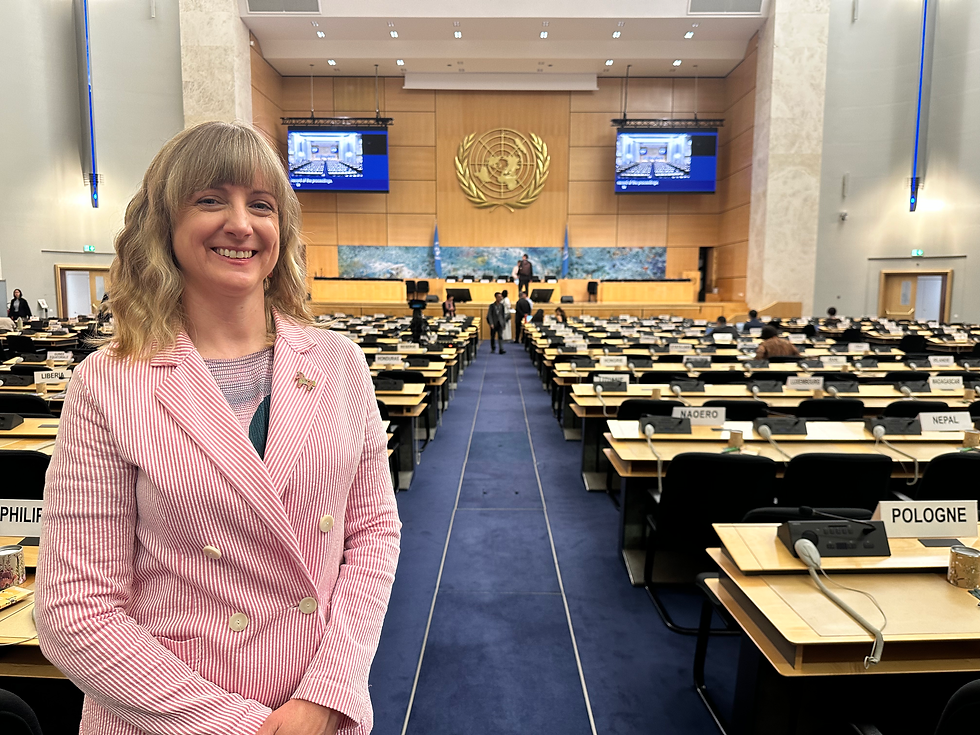
What does it take to facilitate a productive conversation on the human rights of Indigenous peoples, amongst representatives from around the world? Adam Kennedy and I attended the 63rd regular session of the Human Rights Council at the United Nations in Geneva, and observed Ambassador Riia Salsa-Audiffren of Estonia, a Vice-President of the Council, facilitate a three-hour sitting.
Her facilitator moments, although brief, were significant. They were about protecting the process so that each country and NGO could have their say. Here are the four encouragements I write for all facilitators:
1. You can stop someone speaking mid-way: The VP asked a speaker to stop his 90-second presentation and start again, as he was speaking so quickly that not everyone would be able to understand (or translate).
2. You can ask for more careful use of language: She reminded all delegates to refer to states by their correct name. In this way, she helped maintain respectful communication.
3. You can give people an opportunity to speak even if you know they won't take it up: She called on people who weren't there, making the open invitation to contribute very clear.
4. You can give people 90 seconds and hold them to it: She reminded people to stick to the time allocated, as doing so is what enables all voices to be heard, no matter each delegate's level of power.
One connection I saw between the VP and my own facilitation work was the moment she stopped one speaker, explained the problem, and asked him to start again. Interrupting a speaker would normally be seen as taboo, even rude. I do it too when I'm facilitating. It's for a higher need. It takes presence, requires action and calls for a bit of coura
ge, including risking that I'll be disliked as a result.
Protecting the process, and the dignity of participants, needs to be a much higher priority than being liked. A facilitator doesn't need to say much – just set the tone, be present, and create the space so that others can have the conversations they need to have.
Practising aikido helps me intervene more quickly in facilitation moments where a redirect is needed. What aikido can teach us as leaders is what we'll explore at the First International Forum on Aikido in Leadership in Brussels, October 2026.
Thank you to Brian Bond cfc, Executive Director of Edmund Rice International, for the opportunity to attend the HRC.