Start earlier: what the UN Human Rights Council reinforced about engaging Indigenous communities

Almost three decades of effort. And still not everyone feels heard.
The Wixárika Route through the Sacred Sites to Wirikuta was inscribed on the UNESCO World Heritage List in July 2025. The listing followed almost three decades of engagement and advocacy, led by the Wixárika and their allies.
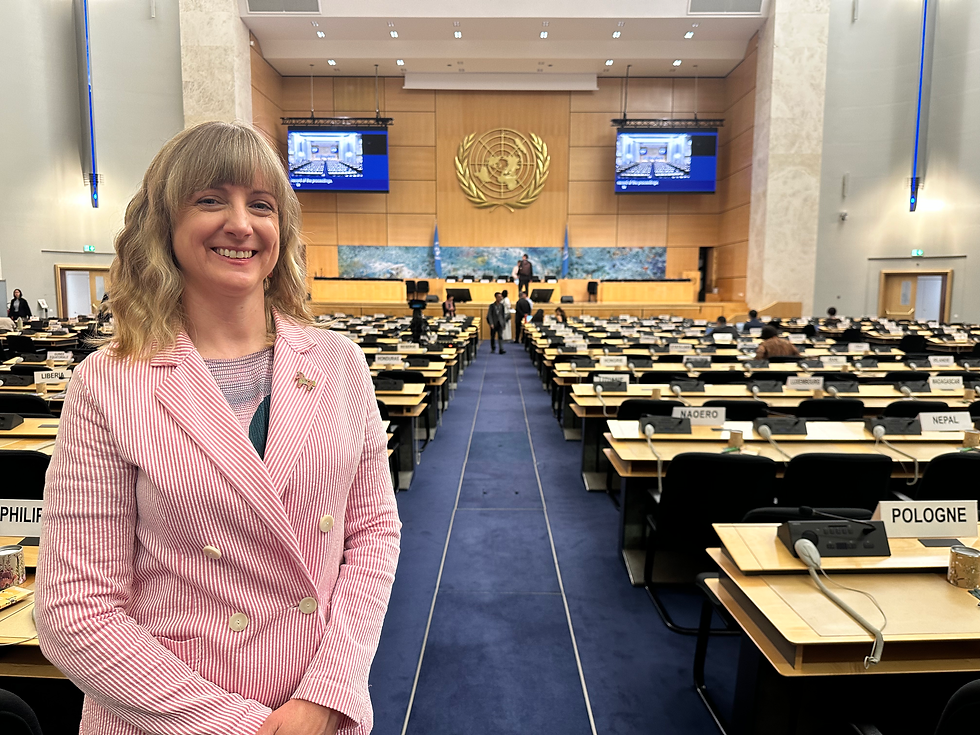
In September, I heard Francisco Vidargas Acosta, Director of World Heritage at Mexico’s National Institute of Anthropology and History, share it as a case study at the 63rd regular session of the Human Rights Council in Geneva. He described how the time taken also allowed the Wixárika to hold spiritual dialogue with their gods before agreeing to World Heritage listing, and to plan with the government how to protect the route in a way that honours its sacredness.
At the same session, I heard Murujuga traditional custodian Raelene Cooper tell the Council that the Australian government is failing to protect the World Heritage-listed rock art in Western Australia from industrial damage. A listing recognises a place. It doesn’t settle how it is protected, or who decides.
Berta de Sancristóbal, Head of Europe and North America Unit, World Heritage, UNESCO, responded to the indigenous rights presentations saying that genuine collaboration takes time, and that engagement often goes wrong when not enough is allowed.
I can’t speak for any Wixárika group, and I write this as a non-Indigenous facilitator who often has the privileged position of advising on timelines and scope. I see and hear examples of a pattern in Australia and elsewhere: engagement with Indigenous communities usually starts too late, after the idea, scope and timeline are set. When engagement starts with a plan to tweak or endorse instead of open questions, then concerns, distrust and opposition are no surprise.
Starting earlier, with questions like “What matters here?” and “What should we understand before we plan anything?”, means:
Letting go of control, and understanding before acting (aka, building connection = some nice links to aikido here and in the following points!)
Remembering that a community is not one voice, so there is never just one conversation
Slowing down, which often speeds things up in the long run and makes for a better result
Almost three decades of effort, and some people still feel they weren't heard.
My time at the Human Rights Council reinforced a lesson: start the conversation earlier than feels comfortable, with open questions, an open mind and an open heart.